



What is an Extended Warranty?
An extended warranty is an optional vehicle service contract you can purchase from a third-party vendor. These cover the price of major repairs or replacements for a certain number of years or number of miles. It usually begins when the manufacturer’s warranty expires and applies to parts and labor. It requires taking the car to an authorized repair center, paying for the work upfront, and then requesting reimbursement later. The coverage offered by extended warranties will vary depending on the policy, but generally they offer coverage for major mechanical parts of the vehicle such as the engine and transmission, as well as add-ons like 24/7 roadside assistance, rental car reimbursement, trip interruption service, and tire protection. However, these policies usually do not cover routine maintenance or damage caused by normal wear and tear.

YoGi Prime Trunk and Backseat Car Organizer
- Premium Heavy-duty Design: Reinforced side walls and non-slip bottom to keep the box organizers in place.
- Privacy Cover: Increases storage capacity and prevents small items or grocery bags from spilling out.
- Heavy-duty Materials: Designed to last for years.
- Lifetime Warranty: Risk-free purchase with a money-back guarantee. No games, no fuss, no runarounds.
- Quantity Discounts: Save 5% on a purchase of 2 and 10% on 3 or more backseat interior organizers.

K KNODEL Car Trunk Organizer with Lid
- Premium Car Trunk Organizer: Suitable for all kinds of vehicles, offering large storage capacity and keeping everything organized for a clean and tidy car.
- High Quality: It is made of high-quality 600D Oxford Polyester material with reinforced handles, making it durable and long-lasting, and features a non-slip bottom to prevent sliding.
- Multipurpose: The smart multipurpose design includes sturdy walls, 2 base plates, 1 slider divider, and 4 mesh pockets for smaller items, as well as 3 side pockets for quick access.
- Easy Installation: It is easy to install, collapse, and clean, and comes with a sturdy and foldable cover for enhanced organization efforts.
- Customer Service: Customer support is provided with a 180-day full refund or replacement for any reason and a 12-month warranty for quality issues.
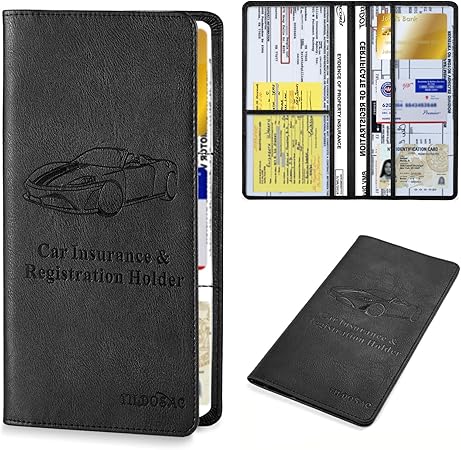
TILDOSAC Car Registration & Insurance Card Holder
- Well-Organized: Designed to keep important documents such as registration and insurance card, business cards, emergency information, paperwork, and gas card well-organized in one place.
- See-Through Design: The transparent material allows the owner to easily find the right document without having to fish through everything.
- Secure and Protective: The holder has 6 clear sleeves to securely store gas cards, car registration and insurance information, protecting them from damage or loss.
- Exquisite Craftsmanship: Made of high-quality materials such as sleek and trim PU leather and heavy-duty vinyl PVC, making it durable, anti-scratch, and tear-resistant.
- Slim Design with Enough Space: The slim, lightweight design is perfect for placement in any glovebox or console, and fits documents up to 9″x 4.7″(23cm x 12cm) while still having enough space to hold all you need. Suitable for cars, minivans, sedans, motorcycles, and boats.

Lusso Gear Car Organizer for Front Seat or Car Seat
- Organize: The Lusso Gear Car Front Seat Organizer helps declutter your front seat and organize your office and travel supplies in your vehicle.
- Fits Any Vehicle: It fits in any vehicle and is easy to install by attaching the strap to the passenger car seat headrest and adjusting to your preferred height.
- Multiple Compartments: The organizer is designed to provide multifunctional compartments and pockets for easy access, catering to different automotive users, including road warriors, soccer moms, and those who need a high-quality mobile office organizer.
- Stylish: The organizer is stylish and sturdy, and it comes with a built-in security flap that conceals the contents of your organizer and acts as a theft deterrent.

- Large Capacity and Foldable Design: L7.5″ x H11.5″x W7.5″ with a waterproof lining that is easy to clean and can be folded for storage when not in use.
- Superior Durability and Waterproof: Made of premium Oxford Polyester material, sturdy and firm, with a waterproof lining to prevent leaks and spills.
- Multi-functional Use: Features two side mesh pockets and a front pocket that can be used for storage of small items such as tissues, snacks, and drinks.
- Smart Multipurpose Design: The separated lid design allows for the use of disposable garbage bags while keeping the lid closed.
- Easy to Install: Adjustable straps with buckle for hanging in various locations such as the front or back of a seat, center console, glove box, or gear stick, and an elastic strap with hook to keep the bag in place and prevent spills.
Why is it Important to Consider the Terms of an Extended Warranty?
1. The warranty covers parts and services that may be required during the lifetime of the vehicle.
The types of parts and services that the warranty covers depend on the specific warranty agreement that is in place. Generally speaking, a manufacturer’s warranty will cover any defects in materials and workmanship and will typically include a powertrain warranty that covers anything that moves the vehicle like the engine, transmission, and power components that travel to the wheels. A bumper-to-bumper or comprehensive warranty will provide coverage for all parts and systems of the vehicle, excluding routine maintenance and damage from wear and tear. Other vehicle coverage may include restraint systems, corrosion, emissions, hybrid components, and electric vehicle components. Some extended warranties may also offer 24/7 roadside assistance, rental car reimbursement, trip interruption service, and tire protection.
2. The warranty covers parts that may become defective over time.
An extended warranty typically covers major parts of your car, such as the engine and transmission. Additional coverage may also include 24/7 roadside assistance, rental car reimbursement, trip interruption service, and tire protection. Depending on the provider and type of warranty, certain parts may not be covered, such as wear and tear, damage from accidents, and use of the car in a way the manufacturer didn’t intend.
3. The warranty may cover repairs that are not covered by the manufacturer’s warranty.
The manufacturer’s warranty covers any problems the manufacturer considers defects and will pay for some repairs to the vehicle. This warranty does not cover damage from accidents or when using your car in a way the manufacturer didn’t intend, nor does it cover normal wear and tear. The manufacturer’s warranty is usually limited to a certain number of miles driven or years used, depending on the type of warranty.
On the other hand, an extended warranty is an insurance policy for major parts of the car. It will cover repairs needed for components that don’t perform to reasonable expectations. This warranty may also cover additional services like 24/7 roadside assistance, rental car reimbursement, trip interruption service, and tire protection. However, it won’t cover routine maintenance or damage caused by normal wear and tear. It’s important to note that an extended warranty won’t kick in until the manufacturer’s warranty expires.
4. The warranty may cover more extensive protection, such as roadside assistance and car rental coverage.
Extended warranties typically cover repairs of major mechanical parts, such as the engine and transmission, as well as additional protections such as roadside assistance, rental car reimbursement, trip interruption service, and tire protection. These benefits are often only applicable if a part covered by the warranty has failed. Moreover, these warranties typically will not cover routine maintenance or damage caused by normal wear and tear.
5. The warranty covers manufacturer defects and workmanship, which may not be covered by the manufacturer’s warranty.
An extended warranty typically covers defects and workmanship that are not covered by the manufacturer’s warranty. Specifically, an extended warranty will cover problems the manufacturer considers to be defects and will kick in when a component does not live up to reasonable expectations. This includes any unexpected failures or breakdowns of parts and systems due to manufacturing defects or insufficient workmanship. The extended warranty will not cover any damage caused by accidents or misuse, nor will it cover normal wear and tear. Additionally, the extended warranty usually begins once the manufacturer’s warranty has expired.
6. The warranty may cover parts that may need repair due to normal wear and tear.
An extended warranty covers parts that break down or become defective during regular use of a car. It pays to replace defective parts with new or reconditioned parts at the company’s discretion. Some extended warranties may cap how much they will pay for parts and labor, while others cover the rate your mechanic charges.
Typical parts covered under an extended warranty include major mechanical components such as the engine and transmission, plus add-ons like 24/7 roadside assistance, rental car reimbursement, trip interruption service, and tire protection. The warranty often does not cover routine maintenance or damage caused by normal wear and tear.
It is important to review the details of the extended warranty to understand what parts are covered and any exclusions that may apply. While some extended warranties may include a “lemon law” provision, this is not standard and should be confirmed with the provider.
7. The warranty may cover parts that are not covered by the manufacturer’s warranty.
An extended warranty typically covers major mechanical parts such as the engine and transmission, plus add-ons like 24/7 roadside assistance, rental car reimbursement, trip interruption service, and tire protection. Generally, extended warranties will not cover routine maintenance or damage caused by normal wear and tear. It is important to note that the warranty coverage will vary with every provider and the type of warranty you choose; so, it is essential to review an exclusion list before buying any extended warranty to ensure that you know exactly what is and what is not covered.
8. The warranty may cover labor costs, which may not be covered by the manufacturer’s warranty.
An extended warranty typically covers a range of labor costs related to repairing or replacing defective parts or components of a vehicle. These costs can include labor for diagnosis and repair of the covered parts, labor for replacement of the covered parts, as well as any other labor costs related to the repair or replacement of the parts. Depending on the warranty, the labor costs may be covered up to a specified rate, or for a specified period of time. Some extended warranties may also provide coverage for towing and rental car expenses related to the covered repairs. It is important to look for a policy that covers the rates your mechanic charges when selecting an extended warranty.
9. The warranty may cover towing and travel expenses in the event of a breakdown.
An extended warranty can cover a variety of towing and travel expenses. These may include roadside assistance, towing, trip interruption reimbursement, and rental car coverage. Roadside assistance typically only applies if the failure of a covered part has occurred. Before purchasing an extended warranty, consumers should consider what coverage is offered and who provides the extras. Additionally, they should make sure they are not duplicating coverage they already have, such as membership with AAA.
Trip interruption reimbursement may be offered with an extended warranty and can cover expenses like meals and lodging incurred due to an unexpected breakdown. Rental car coverage will cover the cost of a rental car while the car needing repair is being serviced.
Finally, warranties may not cover routine maintenance or damage caused by normal wear and tear. Customers should make sure to check what the policy covers, how they will be reimbursed, and any other limitations that may apply.
10. The warranty may provide more benefits and additional coverage than a manufacturer’s warranty.
An extended warranty provides several benefits and additional coverage for vehicle owners. It takes over for the manufacturer’s warranty after it expires and offers protection against costly repairs that would otherwise be covered out of pocket. Additionally, it can provide 24-hour roadside assistance for vehicles that don’t have that coverage from the auto manufacturer. Obtaining an extended warranty for a vehicle is like buying health insurance: you may not ever need it, but if something happens and you have coverage, it can save you plenty of money. The extended warranty plan that’s best for a consumer will depend on their needs, but some of the benefits and coverage include: protection against costly repairs, covering a deductible and a portion of the bill, 24-hour roadside assistance, ability to get the vehicle repaired at any dealership selling the same brand, anywhere in the country, and peace of mind in case of a financial emergency.
Different Types of Extended Warranties and What They Cover
1. Vehicle Warranty
An extended warranty is a contract offered by the vehicle manufacturer or a third-party provider to cover repairs beyond the standard manufacturer’s warranty. It can extend the length of coverage or provide additional benefits for things such as ancillary services, roadside assistance, or rental car reimbursement. Extended warranties are typically offered for a fixed period of time (usually one to five years) and have a set limit of the number of miles that the vehicle can be driven during that time. Coverage can vary greatly depending on the provider and the level of protection being offered. Generally, extended warranties cover any major mechanical or electrical breakdowns that occur during the period of coverage and can provide some peace of mind for vehicle owners.
2. Manufacturer Warranty
A manufacturer warranty, also known as a factory warranty, is a guarantee provided by an auto manufacturer that the new car is free from defects in materials and workmanship. This warranty typically covers parts and labor for a predetermined amount of time, usually 3 years or 36,000 miles, whichever comes first. Exclusions may apply, so it’s important to check with your local dealer or the automaker’s website for warranty information. Generally, a manufacturer warranty covers any major issues that arise during the warranty period and can be used at authorized dealers or where you initially purchased the vehicle. To further protect their vehicle, many drivers opt to purchase an extended warranty once their manufacturer warranty expires.
3. Powertrain Warranty
A powertrain warranty is a type of car warranty which covers the parts of the vehicle that move the car, including the engine, transmission, and any power components that travel to the wheels. It provides coverage for any repairs that may be necessary should any of these parts fail. This type of warranty usually begins after the bumper-to-bumper warranty has expired. For example, Chevy offers a powertrain warranty that lasts for five years or 60,000 miles.
The powertrain warranty is different from a drivetrain warranty, as the former covers the engine while the latter does not. It is also different from a comprehensive (bumper-to-bumper) warranty, which covers all the parts of the car.
Third-party warranty providers may offer extended coverage for the powertrain warranty, offering longer coverage periods than what is offered by the original manufacturer. These providers may also offer additional services such as 24-hour roadside assistance for vehicles that don’t have such coverage from the manufacturer.
Some automakers offer extended powertrain warranties that may last for 10 years or more. However, these warranties are often limited to authorized dealers or where the vehicle was originally purchased, so be sure to keep this in mind.
Ultimately, the powertrain warranty is an important source of protection for drivers and can help save them from costly repairs should any part of their car’s powertrain fail.
4. Major System Warranty
A major system warranty is an extended warranty that covers a car’s major parts, such as the engine, transmission, and power components that connect to the car’s wheels. It is a comprehensive warranty that offers umbrella coverage for all of a vehicle’s parts and systems, excluding routine maintenance and damage from wear and tear. Major system warranties may also include additional add-ons such as 24/7 roadside assistance, rental car reimbursement, trip interruption service, and tire protection. It is important to read the terms and conditions of a major system warranty before purchasing to understand what is covered and excluded.
5. Major Feature Warranty
A Major Feature Warranty is an extended warranty that provides additional protection for specific parts of your vehicle, such as the engine, transmission, and other components. It covers repair and replacement costs due to malfunction or defects, and may also include additional benefits such as 24/7 roadside assistance, rental car reimbursement, trip interruption service, and tire protection. It is important to note that Major Feature Warranties do not cover routine maintenance or damage caused by normal wear and tear, and that it is important to read the fine print to understand the exact terms and conditions of the warranty.
6. Dents and dings Warranty
An extended warranty for dents and dings is a type of warranty that covers repairs for minor body damage, such as scratches, dents, paint chips, and other types of damage. Generally, these warranties do not cover regular maintenance, body damage from an accident, routine maintenance items such as brake pads, brake shoes, fluid replacement, spark plugs, tires, filters, and wheel balancing, or other similar items. Instead, it covers repairs for minor body damage, such as dents, dings, and scratches. This type of warranty is not designed to cover major mechanical parts of the car, but instead covers repairs for minor body damage. It may also include additional benefits such as 24/7 roadside assistance, rental car reimbursement, trip interruption service, and tire protection.
7. Audio System Warranty
An audio system warranty is a type of vehicle warranty that provides coverage for any repairs or replacements needed to a car’s audio system. This type of warranty typically covers any defect or problems related to the audio system, such as speakers, amplifiers, wiring, or other components. It may also cover any installation or set up costs associated with the audio system. The specific terms of coverage for an audio system warranty will vary depending on the manufacturer, but it is generally valid for the entire duration of the car’s OEM warranty. It can also be purchased as an extended warranty, if desired.
8. Importance of Car Warranties
Car warranties are an important consideration for potential car owners. Warranties can help reduce out-of-pocket expenses and provide peace of mind when it comes to unexpected repairs. For owners of mainstream cars, it may make more financial sense to keep an emergency repair fund set aside for car repairs, as the warranty may not pay for itself. However, owners of luxury and sports cars are far more likely to find that an extended car warranty saves them money someday. The average car on American roads today is more than 12 years old and still going, showing that car warranties can be a great way to protect your investment.
It is important to understand the distinction between what is and what is not covered by a car warranty. Warranties cover problems that the manufacturer considers defects and kick in when a component doesn’t live up to reasonable expectations. They don’t cover damage from accidents or when using your car in a way the manufacturer didn’t intend you to use it, nor do they cover normal wear and tear items such as oil changes, brake jobs, tires and other components.
Ultimately, whether or not to buy an extended car warranty is a strategic financial decision. Researching the costs and benefits of a warranty can help inform this decision, and ultimately, car owners should evaluate their own risk tolerance and decide what makes the most sense for them.
9. Add-Ons to Car Warranties
Examples of add-on warranties for cars and what they cover include: Extended warranties, which offer protection similar to what you get in a manufacturer’s warranty, but have exclusions and rules surrounding what they cover; Adjustment warranties, which cover certain car repairs within the first few weeks or months of buying the car; Wrap warranties, which supplement a powertrain warranty and provide bumper-to-bumper coverage; and Corrosion warranties, which help pay for damage caused by rust. Most add-on warranties cover major parts and systems that break down because of flaws or defects in factory-installed parts, as well as comprehensive umbrella coverage for all of a car’s parts and systems, aside from routine maintenance and damage from wear and tear. They may also offer extras, such as roadside assistance, towing, trip interruption reimbursement and rental car coverage.
10. Mechanical Failure Warranty
Mechanical failure warranty is an insurance policy that covers mechanical breakdowns that are not related to car accidents or natural disasters. This type of policy is an alternative to an extended warranty and usually starts as soon as a new car is acquired and continues until the insurance company can no longer cover the car (usually at the 100,000-mile mark). It typically covers big-ticket items such as the engine, drive train, transmission, brakes, exhaust, and power system. However, it does not cover typical wear and tear or items that are covered by an OEM or Limited Factory Warranty. Furthermore, it is only applicable to new cars that are less than one year old or have less than 12,000 miles.
How to Find the Best Extended Warranty for Your Needs
Step 1: Research the different types of extended warranties available
When it comes to extended warranties, there are various types of coverage plans available and it is important to do your research before deciding which is best for you. The two main types of extended warranties are those offered by the original car manufacturer and those offered by third-party providers.
Manufacturer warranties are often more expensive than those offered by third-party companies, but they guarantee the same level of quality and service that the original manufacturer provides. They typically cover the same parts and components, but in some cases they may provide additional coverage that third-party providers do not.
Third-party warranties are usually less expensive than manufacturer warranties, but they may not offer the same quality and service as the original manufacturer. They can also vary in terms of length and coverage, so it is important to read through the contract to make sure you understand what is and isn’t covered.
When researching extended warranties, it is important to check the Better Business Bureau rating of the provider, read online reviews, read the contract carefully and look for money-back guarantees. Additionally, it is important to stay away from sales that offer “today only” prices, as this is often used as a pressure tactic to make you buy a plan that isn’t the best for you.
Ultimately, finding the best extended warranty for your needs and budget requires research and comparison. Make sure you understand what is covered and what isn’t, and select a provider that will provide you with the best value and coverage.
Step 2: Determine what needs are being addressed by your extended warranty
What needs are being addressed by your extended warranty?
- Financial comfort level: Your extended warranty should provide coverage that fits your budget and financial situation.
- Coverage: Make sure to read the contract terms carefully to ensure you understand what is and isn’t covered under your plan.
- Reputability: Research and read reviews of the warranty provider to make sure they have a good reputation and understand customer complaints and comments.
- Price: Compare the costs of different plans to find one that fits your budget.
- Guarantee: Look for a provider that offers a money-back guarantee if you decide the plan isn’t for you.
- Sales pressure: Avoid providers that offer sales pressure or “today only” discounts.
- Value: Remember that the overall value of the warranty coverage is most important – not necessarily the coverage plan with the cheapest price.
- Repair facility: Choose a provider that will allow you to bring your car to a repair facility close to you and pay the repair shop upfront.
Step 3: Make a list of the features you want in an extended warranty
When selecting an extended warranty, there are several features you’ll want to consider when making a list of requirements. Make sure to read the contract carefully, so you know exactly what is and isn’t covered under the plan. Check the Better Business Bureau rating of the company and read customer reviews to make sure they’re honoring their contracts and taking care of customers. Look for a company that allows you to bring your car to a repair facility close to you and pays the repair shop upfront. Additionally, look for a warranty that offers a money-back guarantee if you decide it isn’t the right one for you. Make sure to also get an exclusion list that details all the parts, systems, and repairs that are not covered by the warranty.
Step 4: Check out online reviews and customer satisfaction scores
Step-by-step instructions for using online reviews and customer satisfaction scores to find the best extended warranty for your needs:
- Do some research to find out which extended car warranty providers are available.
- Check the Better Business Bureau (BBB) rating of each provider. Look for companies with an A+ rating as this indicates they have a trustworthy reputation.
- Look for customer reviews on Google, Yelp, and Facebook. Read through the reviews to get an idea of how customers feel about the customer service and claims process of each provider.
- Compare the coverage, price, transparency, and other features of each provider to determine which one is the best fit for your needs.
- Research the exclusions found in the fine print of each provider’s policy.
- Consider the deductible amounts and payment plans offered by each provider.
- Check the track record of success for each provider.
- Once you have narrowed down your choices, contact each provider to ask any remaining questions you may have.
By following these steps, you can use online reviews and customer satisfaction scores to find the best extended warranty for your needs.
Step 5: Ask for referrals from friends and family
Finding the best extended warranty for your needs can be achieved by getting referrals from friends and family. Here are some steps to help you get started:
- Ask your friends and family for recommendations. They may have had positive experiences with certain companies and be able to provide you with good advice.
- Research the companies they recommend. Look into the company’s BBB rating, customer reviews on Google, Facebook, and other platforms, and other information.
- Request a quote and coverage details via email so you can compare, and make the best decision.
- Avoid mail offers that seem fake or use high-pressure tactics.
- Verify that the company is who they say they are.
- Don’t feel pressured to buy what isn’t the best extended warranty solution for you.
- Ask around! Don’t be shy about asking your friends if they know of someone they would recommend. If they have had a bad experience, you will have an idea of who to avoid.
Step 6: Check for eligibility requirements for the plan
What are the eligibility requirements for the plan? The plan is available to customers across the USA, with no yearly mileage limits and coverage up to 185,000 miles. Prices are fixed for the life of your term, and there is no waiting period for coverage – you can quote today and be covered tomorrow. Educators can take advantage of summer or holiday skip payment options, and NEA members save an average of $423 per year.
Step 7: Read up on the company’s history, brand trustworthiness and customer service ratings
When finding an extended warranty, it is essential to read up on a company’s history, brand trustworthiness, and customer service ratings. This is because these factors can determine whether a company is providing a reliable and trustworthy service. Positive reviews, peace of mind benefits, and a track record of success are all indicators of a reputable and dependable car warranty company. Furthermore, it is important to check the fine print of a policy to ensure that you know exactly what is covered and what is excluded. Additionally, it is essential to research a company’s BBB rating, online reviews, and their money back guarantee policy. Doing so can help you make an informed decision and avoid companies that have a history of making false promises or overcharging customers. Ultimately, taking the time to research a company and their services can help you make the best decision for your needs, and ensure that you get the most value for your money.
Step 8: Consider price points and coverage options
When comparing price points and coverage options for an extended warranty, it is important to consider several factors. First, it is important to consider your financial situation and how much coverage you are comfortable with. It is also important to compare prices and coverage plans across different providers to ensure that you are getting the best deal. Furthermore, it is important to research the company and the service contract, paying close attention to customer service reviews so that you can trust the company you choose. Additionally, look for providers that offer transparent pricing and multiple coverage and deductible options. This will provide you with the most choice and flexibility when selecting the right extended warranty for your needs. Finally, make sure that the provider guarantees coverage across the USA, without putting a cap on the number of miles driven per year.
Step 9: Read up on the number of years locked in, the limit on mileage or restrictions imposed on use
When looking into an extended warranty, it’s important to understand the terms of the coverage in detail. This includes reading up on the number of years locked in, the limit on mileage, and any restrictions imposed on use with the warranty. Most standard packages only cover 10,000 miles/year, but some may offer more expensive packages that provide more coverage. Companies like olive have no yearly mileage restrictions, and they cover cars with less than 140,000 miles on them up to 185,000 miles, regardless of how much you drive in year one. If your car is older, has over 140,000 miles, or is one of the few brands or models not covered, you may need to reach out to a different company. In addition, the industry standard of equating one year of warranty coverage to 12,000 miles of driving is becoming outdated; the average American logged about 12,700 miles in 2020, and the number is expected to rise. Make sure to ask questions and be aware of the mileage limits when looking into an extended warranty.
Step 10: Check if the plan is transferable or eligible for any other products or services
Bonus Tip: Consider buying a used car under $10,000 if you’re looking to save money
When considering whether a warranty is transferable or eligible for other products or services, there are a few factors to consider.
First, check if there is an option to transfer the warranty. If there is, ask if the buyer has to agree to take over your payments in order to do so.
Second, consider if the buyer of your car may benefit from a warranty with purchase. This could potentially help you get a better price for your vehicle and demonstrate that you have taken good care of it.
Third, check the flexibility of your plan to ensure you’re never stuck in a situation you don’t want to be in.
Finally, make sure that the car warranty you are considering is backed by a reputable provider with a good rating from the Better Business Bureau. This will provide you with the confidence that you are getting a reliable product.