



What is Rate Shopping for Car Insurance?
Rate shopping for auto insurance is when you research and compare different auto insurance quotes from different insurers to find the lowest rate. This process could involve getting a quote online, calling up different insurers to confirm their rates, or taking advantage of any deals or offers they may be running. It is important to take your time and shop around as you may be able to save money on your car insurance by taking advantage of discounts or special offers. It is also important to be aware of price optimization, which is when insurers raise their rates based on your browsing activity. To combat this, it is recommended to shop around and compare quotes from several auto insurance companies.
Rate shopping for automobile insurance is the process of comparing quotes from different auto insurance providers to find the best deal available. This process can help you combat price optimization, which is when auto insurance companies raise their rates for consumers who have been to multiple websites. It is important to shop around and compare quotes from several vehicle insurance companies in order to find the best deal. Additionally, it is important to remember that cookies can track your search history, so if you have been to multiple insurance websites, the company may charge you more.

YoGi Prime Trunk and Backseat Car Organizer
- Premium Heavy-duty Design: Reinforced side walls and non-slip bottom to keep the box organizers in place.
- Privacy Cover: Increases storage capacity and prevents small items or grocery bags from spilling out.
- Heavy-duty Materials: Designed to last for years.
- Lifetime Warranty: Risk-free purchase with a money-back guarantee. No games, no fuss, no runarounds.
- Quantity Discounts: Save 5% on a purchase of 2 and 10% on 3 or more backseat interior organizers.

K KNODEL Car Trunk Organizer with Lid
- Premium Car Trunk Organizer: Suitable for all kinds of vehicles, offering large storage capacity and keeping everything organized for a clean and tidy car.
- High Quality: It is made of high-quality 600D Oxford Polyester material with reinforced handles, making it durable and long-lasting, and features a non-slip bottom to prevent sliding.
- Multipurpose: The smart multipurpose design includes sturdy walls, 2 base plates, 1 slider divider, and 4 mesh pockets for smaller items, as well as 3 side pockets for quick access.
- Easy Installation: It is easy to install, collapse, and clean, and comes with a sturdy and foldable cover for enhanced organization efforts.
- Customer Service: Customer support is provided with a 180-day full refund or replacement for any reason and a 12-month warranty for quality issues.
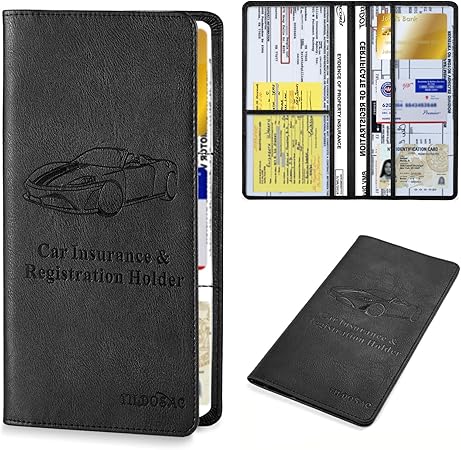
TILDOSAC Car Registration & Insurance Card Holder
- Well-Organized: Designed to keep important documents such as registration and insurance card, business cards, emergency information, paperwork, and gas card well-organized in one place.
- See-Through Design: The transparent material allows the owner to easily find the right document without having to fish through everything.
- Secure and Protective: The holder has 6 clear sleeves to securely store gas cards, car registration and insurance information, protecting them from damage or loss.
- Exquisite Craftsmanship: Made of high-quality materials such as sleek and trim PU leather and heavy-duty vinyl PVC, making it durable, anti-scratch, and tear-resistant.
- Slim Design with Enough Space: The slim, lightweight design is perfect for placement in any glovebox or console, and fits documents up to 9″x 4.7″(23cm x 12cm) while still having enough space to hold all you need. Suitable for cars, minivans, sedans, motorcycles, and boats.

Lusso Gear Car Organizer for Front Seat or Car Seat
- Organize: The Lusso Gear Car Front Seat Organizer helps declutter your front seat and organize your office and travel supplies in your vehicle.
- Fits Any Vehicle: It fits in any vehicle and is easy to install by attaching the strap to the passenger car seat headrest and adjusting to your preferred height.
- Multiple Compartments: The organizer is designed to provide multifunctional compartments and pockets for easy access, catering to different automotive users, including road warriors, soccer moms, and those who need a high-quality mobile office organizer.
- Stylish: The organizer is stylish and sturdy, and it comes with a built-in security flap that conceals the contents of your organizer and acts as a theft deterrent.

- Large Capacity and Foldable Design: L7.5″ x H11.5″x W7.5″ with a waterproof lining that is easy to clean and can be folded for storage when not in use.
- Superior Durability and Waterproof: Made of premium Oxford Polyester material, sturdy and firm, with a waterproof lining to prevent leaks and spills.
- Multi-functional Use: Features two side mesh pockets and a front pocket that can be used for storage of small items such as tissues, snacks, and drinks.
- Smart Multipurpose Design: The separated lid design allows for the use of disposable garbage bags while keeping the lid closed.
- Easy to Install: Adjustable straps with buckle for hanging in various locations such as the front or back of a seat, center console, glove box, or gear stick, and an elastic strap with hook to keep the bag in place and prevent spills.
Why is it Important to Shop Around for Car Insurance?
It is important to shop around for car insurance because you can save money by taking advantage of offers and discounts. Comparing different auto insurance companies can help you find the best coverage for the price and help you combat price optimization. You can also maximize your savings by taking advantage of discounts, maintaining good credit, bundling insurance policies, and seeking out group insurance opportunities. By taking the time to research and compare car insurance quotes from several providers, you can save money and get the coverage you need.
1. You can compare rates and coverage options
Step 1: Shop around and compare quotes from several auto insurance companies. This can help you combat price optimization and save you money at the same time.
Step 2: Check to see if there are any deals or offers on. One of the most common offers of all is that you can save money on your car insurance by buying online. Therefore, if you got your quote online and then called up to confirm, you could end up paying more for your rates because you’ve changed the way you’re dealing.
Step 3: Compare over 200 auto insurance companies at once. Consider looking into secured websites with SHA-256 Encryption to ensure the safety of your data. Also, remember that any changes in your coverage can change your rate.
Step 4: Log in to your policy to review your coverages. Look out for insurance products that may come with discounts or other benefits.
Step 5: Costs will continue to rise through 2022. Therefore, shop for a better rate before you renew your current policy.
Step 6: Consider bundling multiple insurance policies with the same company. You may be able to net big discounts by doing so.
Step 7: Enter your ZIP code on a free quote tool to compare quotes from many different companies. This increases your chances of finding a better rate.
2. You can see if there are any discounts available
Step 1: Check your statement and contact your insurance company to see if they are running any short-term deals or offers that you may be unaware of.
Step 2: Shop around and compare quotes from several auto insurance companies to combat price optimization and save money.
Step 3: Look into bundling multiple insurance policies with the same company to net big discounts.
Step 4: Check if your insurer offers introductory discounts when you buy your first policy with them.
Step 5: Ask your insurer if they offer other discounts such as good student discounts, safe driver discounts, senior discounts, or discounts for those who drive alternative fuel vehicles.
Step 6: Equip your vehicle with additional safety features like anti-lock brakes, anti-theft devices, dashboard cameras, and electronic stability controls as these may qualify for discounts.
Step 7: Ask your insurer if they offer discounts for going paperless or signing up for a new policy before your old one ends.
Step 8: Compare over 200 auto insurance companies at once to make sure you’re getting the best value.
3. You can find a policy that works best for you
Step-by-Step Instructions for Finding the Best Car Insurance Policy
1. Shop around and compare quotes from several auto insurance companies. This is the best way to ensure you are getting the best rate and to help you combat price optimization.
2. Consider stepping down your coverage if you can’t afford full coverage or have more coverage than you need.
3. Ask yourself the following questions before buying any car insurance policy:
– What type of coverage do I need?
– What is the cost of coverage?
– Is there a deductible?
– What discounts are available?
– What is the claims process?
– Are there any other benefits?
– Are there any additional fees I should be aware of?
4. Bundle multiple insurance policies with the same company for major discounts. This could save you 20% or more on your overall bill.
5. Understand the difference between a car insurance quote and a car insurance rate. A quote is the estimated cost for the policy, while a rate is the final cost.
6. Look for introductory discounts when buying your first policy with a car insurance provider. Likewise, pay attention to any additional fees.
7. Compare the different car insurance providers and policies to ensure you’re getting the best value.
8. Start your auto insurance quote to get a feel for what you may pay.
By following these steps, you can find the policy that works best for you when shopping for car insurance.
4. You can avoid getting stuck with a policy that doesn’t meet your needs
Shopping around and comparing quotes from multiple auto insurance companies can help you avoid getting stuck with a policy that doesn’t meet your needs. It can also help you combat price optimization and save you money. Bundling multiple insurance policies with the same company can net big discounts, and understanding the difference between quotes and rates can help you keep your rates from going up after the policy is bound. Raising the deductible can also reduce the premium, and staying safe on the road by avoiding violations and accidents can help prevent rates from increasing at renewal time. Lastly, you can look into other discounts and services that can qualify you for lower rates. Ultimately, comparing different quotes from multiple companies can help you make sure you’re getting the best policy for your needs.
5. You can be sure that you are getting the best value for your money
It’s important to make sure you’re getting the best value for your money when you buy car insurance. Comparing quotes from different auto insurance companies and asking questions about discounts and offers can help you get the best deal. Bundling multiple insurance policies with the same company can also provide big discounts of up to 20%. In addition, it’s worth looking into additional safety features such as anti-lock brakes, anti-theft devices, dashboard cameras and electronic stability controls as they may provide additional discounts. Finally, be sure to check Bankrate for any deals or offers that could be affecting your current or previous quote. With so many options out there, it pays to shop and compare to make sure you’re getting the best value for your money.
6. You can be sure that you are getting the best service from your insurer
Step 1: Shop around and compare quotes from several car insurance companies to ensure that you are getting the best deal.
Step 2: Check for any offers or deals that the car insurance company may be running. Often, you can save money when buying your car insurance online.
Step 3: Consider bundling multiple insurance policies with the same company. This can net big discounts and other benefits.
Step 4: Look into any discounts that your current insurer may offer. Many companies offer discounts to safe drivers, seniors, people who drive alternative fuel vehicles, and more.
Step 5: See if you qualify for any introductory discounts when buying your first policy with the insurer.
Step 6: Look into safety features for your vehicle that may qualify for discounts. Common features include anti-lock brakes, anti-theft devices, dashboard cameras and electronic stability controls.
Step 7: Make sure to check your statement and contact your insurance company if you have any questions or concerns.
Step 8: Utilize price comparison sites if you are concerned about the “price optimization” issue that some insurance companies use. This will help you avoid this issue, as you are not actually visiting the website itself and so you aren’t having the cookies stored on your computer.
7. You can make sure that you have enough coverage for any potential losses
Shopping around for car insurance can help make sure you have enough coverage for any potential losses by allowing you to compare quotes from multiple companies. This gives you the opportunity to get the coverage you need at the best rate possible, making sure that you are adequately covered and not overpaying for any additional coverage. Additionally, you can take advantage of discounts that may be offered by bundling multiple insurance products with the same company, as well as informing your insurance company of any lifestyle changes that may have resulted in you driving less, in order to get lower rates.
8. You can make sure that you are not spending more than you need to on your policy
Shopping around for car insurance can help you avoid paying more than you need to on your policy. Comparing quotes from multiple insurance companies can help you combat price optimization and save you money. Bundling multiple insurance policies with the same company can also net you big discounts. Additionally, you can maximize opportunities to save on your premium by shopping around, asking about discounts, maintaining good credit, and seeking out group insurance opportunities.
9. You can be sure that you are getting the best coverage for the risks that you face
Shopping around for car insurance can help you ensure that you are getting the best coverage for the risks that you face. Comparing multiple insurance companies and their policies can help you find the best deal for your situation. Additionally, comparing quotes from different companies can help you combat price optimization. Furthermore, comparing over 200 auto insurance companies at once can help you find the best coverage for your needs. Additionally, different locations have different risk factors, so it’s important to take this into consideration when shopping for car insurance. The type of vehicle you drive and any additional safety features on it can also affect the cost of your premiums. By taking all of these factors into account and shopping around, you can make sure you are getting the best coverage for the risks you face.
10. You can be sure that you are getting the best value for your money
When it comes to car insurance, it’s important to ensure you’re getting the best value for your money. The best way to do this is to compare quotes from multiple auto insurance companies. That way, you can combat price optimization and save money at the same time. Additionally, make sure to check and see if your insurer has any offers or deals on, as you may be eligible for a discount that you weren’t previously aware of.
You may also want to equip your vehicle with additional safety features, as many insurance providers offer discounts for anti-lock brakes, anti-theft devices, dashboard cameras and electronic stability controls. Some insurers also offer discounts to good students, safe drivers, seniors and people who drive alternative fuel vehicles. Be sure to check if you qualify for any of these discounts as well.
What Factors Can Affect Your Car Insurance Rates?
1. Insurance Company
When shopping for car insurance, there are several factors that can affect the rates charged by an insurance company. These include the type of car you drive, your age and driving history, your credit score, where you live and park your car, and the number of miles you drive each year. Additionally, insurance companies may offer discounts for bundling policies or for having multiple cars insured on the same policy. It’s important to shop around for the best rate and to make sure you’re getting the best value for your money. Liberty Mutual offers an extensive list of car insurance discounts, so you can customize your policy to fit your budget. Start your auto insurance quote today to see how much you could save.
What factors affect the rate of car insurance provided by an insurance company? [Expanded list]: Insurance companies take a variety of factors into consideration when determining the rate of car insurance. These factors include the age and driving record of the insured, the type of car being insured, the location of the vehicle, the amount of coverage chosen, and any special discounts offered. Additionally, some companies may use price optimization to differentiate rates among customers, so shopping around to compare quotes from several auto insurance companies is important. Other factors that may affect car insurance rates include the use of safety features and technology, the driver’s credit score, and the policyholder’s driving history.
2. Type of Policy
The main difference between types of car insurance policies is the levels of coverage and the cost of the policy. The higher the coverage levels, the higher the premium rate can be. This is because the policyholder is paying for more protection. Factors such as the state you live in, your driving history, and the type of vehicle you own can all affect the rate increases you see on your policy. Minimum coverage policies usually cost less than a policy with higher limits or full coverage, but rate increases can still impact the cost of these policies.
Rate increases can vary depending on the coverage types and levels, but they all affect the premium in different ways. For example, inflation and other vehicle costs can increase the cost of property damage liability and collision coverage, while rising medical costs could affect the cost of bodily injury liability coverage and medical payments or personal injury protection coverage.
It is important to shop around for the best policy and rate before renewing your current policy, as costs are likely to continue to rise until 2022. Comparing multiple insurance products can mean discounts and other benefits, so it pays to take the time to look around and find the best coverage for you.
3. Driver Profile
What factors affect a driver’s car insurance rates? [Expanded list]
Car insurance rates are impacted by a variety of factors, including: the type of car being insured, the age and driving record of the driver, the location of the vehicle, the amount of coverage requested, and whether or not there are additional drivers on the policy. Adding a new driver to an existing policy can significantly raise rates, especially for teenage drivers or those with a poor driving record. Additionally, if you are purchasing a more expensive car, your premium may increase due to the higher risk of theft or damage associated with it. Your insurance company will also look at your individual driving history and any accidents or violations, to help determine the best rate for you. Additionally, if you qualify for any discounts such as a good student discount or a low mileage discount, these can help to lower your premiums.
4. Vehicle
Various factors can affect your car insurance rates based on your vehicle, such as the make and model, vehicle value, parts in high demand, and additional safety features. Additionally, the VIN number can have an impact on the rate if it was not included in the original quote. Additionally, any accidents or driving history of other drivers on the policy can influence the rate. Furthermore, if you choose to pay the premium in installments, this may result in an additional fee each time.
5. Location
What factors affect the cost of car insurance based on location? [Expanded list]: The number of car accidents and the cost of repairs in a given area, the density of traffic and speed limits, the types of roads, the urban or rural setting, the crime rate, and the availability of public transportation. Additionally, insurance carriers take into account the ZIP code, the climate, and the state and local laws when determining car insurance rates.
6. Coverages
Car insurance rates are usually affected by a number of different factors, including the age and driving record of the policyholder, the type of vehicle they drive, the location they live in, and the coverages they choose. Most commonly, the coverages that affect car insurance rates include liability coverage, uninsured/underinsured motorist coverage, comprehensive coverage, collision coverage, medical payments coverage, and personal injury protection coverage. Each of these coverages can be customized to fit individual needs, and the amount of coverage chosen can have an impact on the overall premium cost. Additionally, some insurers may offer discounts for certain coverages or other incentives, such as multi-car or multi-policy discounts.
7. Age Ranges
Car insurance rates vary depending on your age, gender, driving history, vehicle type and coverage choices. Generally, for most states (except Hawaii and Massachusetts), car insurance rates range from 16-20 for young drivers, 21-24 for those in their early twenties, 25-34 for those in their thirties, 35-44 for those in their forties, 45-54 for those in their fifties, 55-65 for those in their sixties and 65+ for seniors. In addition to these factors, broader factors such as changes in insurance laws, the likelihood of claims occurring in certain areas or increases in vehicle repair costs may also impact car insurance rates.
8. Credit Score
Having a good credit score can have a positive impact on your car insurance rates. Insurance companies often look at your credit score when determining rates, as it can provide insight into your overall risk as a customer. People with good credit histories are often deemed as lower risk and can receive more competitive rates. On the other hand, people with poor credit histories may be seen as higher risk and can be charged higher car insurance rates. In certain states, such as California, Hawaii, and Massachusetts, insurers are not allowed to use credit scores when calculating rates.
9. Claims History
Claims history can have a significant impact on car insurance rates. Insurance companies tend to focus on the past three years of a driver’s record when determining rates, and an accident can affect those rates for at least that long. Additionally, changes in coverage can also lead to changes in the rate, as can any speeding tickets on the record. Furthermore, a driver’s qualification for discounts may also change based on their record. Therefore, it is important to understand how insurance claims can affect car insurance rates before making any decisions.
10. Petitions
The effects of petitions on car insurance rates can vary depending on the type of policy and claims filed. When filing a claim, it is important to consider the potential impact on car insurance rates. Some things to consider include the deductible, the type and amount of coverage needed, the size of the claim, and the length of time since the last accident or claim. Additionally, student loan refinancing and personal loan applications may also have an effect on car insurance rates. Understanding the potential implications for filing a claim can help drivers make informed decisions about their car insurance coverage.
10 Reasons Why Your Quote Might Have Changed After You Received It
1. Insurance Company Variables
The variables that affect the quote of an insurance company include personal factors such as age, gender, driving history, and marriage status; the type of vehicle and coverage levels you choose; the overall cost of doing business; inflation; supply chain disruptions; changes in driving habits; the crime rate of the area; the number of accidents and uninsured drivers on the road; insurance fraud; and the frequency of natural disasters in the area.
2. External Factors
External factors that could affect a quote include the crime rate, number of accidents due to distracted drivers, the number of uninsured and underinsured drivers on the road, insurance fraud, increased natural disasters, accidents resulting in a claim, speeding tickets, your qualification for discounts, the car you drive, how often you drive it, and where it is kept, how long you’ve been driving, driving record, and claims history, and recent supply chain disruptions.
The crime rate in an area can affect your quote by increasing the risk of theft or vandalism to your vehicle, resulting in a higher premium. Additionally, the number of accidents due to distracted drivers can also cause your rate to go up due to the increased risk of an accident. The number of uninsured and underinsured drivers on the road can also raise your rates since the insurance company is taking on more risk. Insurance fraud can also lead to increased premiums as insurers attempt to mitigate the costs of fraudulent claims. Natural disasters can also cause damage to your vehicle, leading to an increase in premiums. Even speeding tickets can lead to a higher rate, as can a decrease in qualifications for discounts.
The car you drive and how often you drive it can also have an effect on your quote as cars with more safety features or that are driven less often can result in lower premiums. The length of time you’ve been driving and your driving record can also impact your rates, as insurers may adjust rates depending on the risk they are taking on. Finally, recent supply chain disruptions can lead to increased repair costs and parts prices, resulting in higher premiums.
3. Changes in Your Policy
What are some examples of changes in your policy that could affect your quote?
1. Moving: If you move, your premium could increase or decrease depending on the new location. Different zip codes can have different claims rates, and if you are moving out of state, you may require a new policy altogether.
2. Marriages, Newly Licensed Drivers, or Birthdays: These changes in your household can impact your rate by changing the number of drivers and their ages.
3. Accidents: If you are in an accident that requires a claim, your rate could increase.
4. Speeding Tickets: Speeding tickets may also increase your premium, so it is important to be aware of the speed limit and drive safely.
5. Discounts: Your qualification for discounts may also change based on your record, so it is important to stay up to date with your policy to make sure you are getting the best rate possible.
6. Change of Address: Changing the address where your car is “garaged” (kept overnight) can lead to a higher premium if the new location is in an area with higher claims rates.
4. Rating System Changes
The effects of a rating system change on a quote can be seen in both the decrease and increase of premiums. Marriages, newly licensed drivers, or birthdays can all affect the rate of a quote, as can changes in coverage, accident claims, and speeding tickets. More significantly, changes in an insurance score can also cause premiums to change. This is because insurers have data demonstrating the link between credit history and the odds of filing a claim. Ultimately, these changes can affect one’s qualification for discounts, which increases or decreases the amount a person pays for their quote.
5. New Information Provided by You
What type of information can change the quote provided to you after you receive it?
-Inaccurate or incomplete information such as an incomplete vehicle identification number (VIN), omitting accident history, or leaving out details about other drivers’ driving histories
-Providing false or incomplete information on the application
-Changes to your personal information such as marriage status, address, driving record, etc.
-Changes to the coverage type, limits, and deductible amount you select
-Selecting to pay the premium in installments, which may result in an additional fee
-Changes to the vehicle make and model
-Changes to the address where the vehicle is stored
-Changes to the driver’s license information
6. Premium Increases From Competitors
Premium increases can have a noticeable impact on your quote. For example, if you move, your premium could increase or decrease, depending on the state in which you live. Similarly, if you get married, add a newly licensed driver, or have a birthday, your quote could also be affected. In addition, if you are involved in an accident that results in a claim, your premium may increase as a result. Even a speeding ticket can cause your rate to increase, as it can affect your eligibility for discounts. With all of the economic and societal influences, costs are expected to rise through the end of 2022, so it is important to shop for a better rate before renewing your current policy.
7. Availability of Discounts
The availability of discounts can have a significant effect on the cost of car insurance quotes. Bundling multiple policies together, equipping your vehicle with safety features, and qualifying for special discounts can all lead to substantial savings. Additionally, older drivers may find their premiums increase as they age, while younger drivers may benefit from an introductory discount. Shopping around and taking advantage of discounts can therefore be a great way to find the best value for your car insurance.
8. Change in Perils
The perils of changing a quote after receiving it is that your rate can increase or decrease depending on a number of factors. Moving to a different location can lead to higher rates due to a higher risk of claims in that area, and accidents or speeding tickets can lead to an increase in your premium as well. Additionally, changes in coverage can also affect your rate, as different coverage types are affected by different factors such as inflation, medical costs, and supply chain issues. It is important to consider all these factors when getting a quote, and make sure to review your policy and coverages regularly to ensure you are receiving the best rate.
9. Seasonal Changes
What are some examples of seasonal changes that could affect a quote?
Seasonal changes in the automotive industry or the weather could affect a person’s car insurance quote. For example, the COVID-19 pandemic caused a decrease in demand and transportation, resulting in fewer people on the road and lower rates. The ice storm in February 2021 knocked out production plants and factories, causing a decrease in the supply of vehicle parts and an increase in repair costs. Additionally, as people start to drive more, due to the return to normal activities, insurance carriers may need to rebuild their claim reserves, which can result in higher premiums. Seasonal changes in weather can also affect a person’s rate, for instance an increase in snow or rain can lead to an increase in accidents and an increase in rates. Finally, discounts may also change based on a person’s driving record.
10. Change in Advertisements and Disclaimers
What types of advertisements and disclaimers can cause a quote to change? [Classification with explanation]
Moving: If you change your address, it could affect your insurance rate.
Life Events: Marriages, having a new driver in the household, or birthdays can change your rates.
Coverage Changes: Any changes in your coverage, such as adding or dropping coverage, can change your rate.
Accidents: Accidents that result in a claim can impact your rate.
Speeding Tickets: Speeding tickets may increase your premium.
Discounts: Your qualification for discounts may also change based on your record.
Multiple Products: Buying multiple insurance products can mean discounts and other benefits.
How to Find the Best Car Insurance Deal
Step 1: Research your options
Step 1: Learn more about car insurance. Read up on the basics, and ask yourself the eight questions to consider before buying any car insurance policy.
Step 2: Shop around and compare quotes from multiple auto insurance companies. This can help you combat price optimization and save money.
Step 3: Ask questions when buying a used car. Arm yourself with the right information to make a worry-free process.
Step 4: Research the best car insurance companies. Find out which companies have the best coverage, customer service, and pricing.
Step 5: Compare over 200 auto insurance companies at once to find the best deals. Look for discounts and other offers that can lower your insurance costs.
Step 2: Calculate your rates
Step 1: Gather the information you need. You will need to have a valid driver’s license, vehicle identification numbers (VIN) for all vehicles, and the address where the vehicle will be stored. You will also need to provide information about your driving history and the driving history of any other drivers on the policy.
Step 2: Get a quote. You can get a car insurance quote either online or by phone. When you are getting a quote, provide complete and accurate information. If the information you provide is inaccurate or incomplete, the quote amount may differ from the actual rate for the policy.
Step 3: Compare quotes. Compare the quotes you receive to find the best rate for you. Consider any additional fees, such as if you choose to pay your premium in installments.
Step 4: Check periodically. Once you have selected a policy, it is important to regularly check your rate as there can be changes in national statistics that affect your rate. You should also periodically review your policy to make sure all your coverages are still up-to-date.
Step 5: Look for discounts. Car insurance companies may offer discounts for safe drivers, good students, and more. Ask about any discounts you may be eligible for.
Step 3: Make sure you have the right coverage
Step 1: Log in to your policy to review your coverages and make sure you understand what you have and what you need.
Step 2: Research your state’s minimum insurance requirements, as well as additional coverage options you may need to feel secure while driving.
Step 3: Go through the quote process and provide accurate and complete information. This includes personal details such as name, age, address, and car make and model, as well as driving record information and any accidents or violations.
Step 4: When selecting coverage, consider the type of coverage, limits, and deductible amounts you need to feel secure.
Step 5: Double check your driving record with your state’s Department of Motor Vehicles (DMV) to make sure any tickets have been removed.
Step 6: Use your vehicle identification number (VIN) to make sure you have the exact make and model of your vehicle.
Step 7: Consider the coverage you need ahead of time and get a few quotes regularly to make sure your coverage is up to date.
Step 8: Be aware of any taxes or fees associated with purchasing a policy in your state.
Step 4: Check if there are any discount or insurance packages availabl
Step 1: Check to see if there are any deals or offers on. One of the most common offers of all is that you can save money by buying your car insurance online.
Step 2: Make sure to check if there are any short-term deals or offers available from your current insurance provider that may be affecting your current or previous quote.
Step 3: Consider bundling multiple insurance policies with the same company to get big discounts.
Step 4: Ask about introductory discounts for buying your first policy with a certain company.
Step 5: Shop around and compare quotes from several auto insurance companies to combat price optimization.
Step 6: See if you qualify for any other discounts from your current insurer. Many companies offer discounts to good students, safe drivers, seniors, people who drive alternative fuel vehicles and more.
Step 7: Equip your vehicle with additional safety features like anti-lock brakes, anti-theft devices, dashboard cameras and electronic stability controls to get a discount from your insurer.
Step 8: Ask your insurer eight questions before buying any car insurance policy.
Step 5: Examine the driver record and driving history
The driver record and driving history can help you find the best car insurance deal by providing a more accurate basis for premiums. Accurate information about your driving record, such as traffic violations, convictions, and car accidents, allows insurers to more accurately assess your risk level and determine the appropriate rates. Furthermore, any accidents or violations that are still on your record can significantly increase your premium. It’s essential to provide an accurate picture of your driving record when getting a quote in order to secure the best deal. Additionally, the qualification for discounts may change depending on your record, so it’s important to stay aware of your driving record and take advantage of any discounts you may be entitled to.
Step 6: Look into other insurance providers’ discounts policies
Step 1: Research discounts offered by other insurance providers. Check to see if they offer discounts for being a good student, a safe driver, a senior citizen, an alternative fuel vehicle driver, or discounts for bundling multiple insurance policies.
Step 2: Contact your current insurance provider to ask about discounts you may qualify for. Ask about introductory discounts for new customers, discounts for signing up for paperless statements, and discounts for being a loyal customer.
Step 3: Check your credit score to make sure it is in good standing. This is important since many insurance carriers use your credit score as a factor when determining your premium.
Step 4: Look into group insurance opportunities. You may be able to get group discounts through alumni, business, and professional organizations. It’s worth reaching out to find out what discounts they may offer.
Step 5: Compare quotes from multiple auto insurance companies to find the best value. Make sure to shop around to make sure you’re getting the best deal.
Step 6: Visit an online marketplace like Credible that includes insurance services to make it easy to find a carrier and policy that’s right for you.
Step 7: Consider adding safety features to your car
Adding safety features to your car can help you find the best car insurance deal by reducing the risk of your car being stolen or involved in an accident. Safety features such as anti-lock brakes, anti-theft devices, dashboard cameras, and electronic stability controls can all help to lower your insurance premiums. In addition, luxury cars that are at a high risk of theft can also benefit from additional security features. By taking this step, you can potentially save money on your insurance premiums and reduce your risk of theft or costly repairs.
Step 8: Monitor your discounts as they change over time
Step-by-Step Instructions:
1. Review your current policy and make sure you understand the coverage types, limits, discounts, and premium. Make a note of your policy’s effective dates and renewal dates.
2. Contact your car insurance company prior to renewal and ask about discounts that you may be eligible for, such as those for good students, safe drivers, seniors, and people who drive alternative fuel vehicles.
3. Shop around for other insurance providers and compare quotes to make sure you are getting the best price for the coverage you need.
4. Take advantage of discounts where you can, such as early-shopper discounts or discounts for signing up for multiple insurance products.
5. Monitor your policy and check your renewal date every year. Check to see if there are any discounts or offers on your policy and make sure to compare quotes between companies. If your premium increases, try to see if you can adjust your policy or add extra discounts to lower rates.
Step 9: Shop around for the best deal
Step 1: Shop around and compare quotes from several auto insurance companies. This can help you combat price optimization and save you money. You can find auto insurance shopping guides online to help you choose the best car insurance company.
Step 2: Check to see if any deals or offers are available. For example, you might be able to save money by buying car insurance online rather than through a traditional broker.
Step 3: Consider bundling your auto and home coverage with the same company. This could net you a 20% or more discount on your overall bill.
Step 4: Ask your current insurance provider about any available discounts. Good students, safe drivers, seniors, people who drive alternative fuel vehicles, and more may be eligible for a discount.
Step 5: Research multiple insurance products. This can mean discounts and other benefits.
By following these steps, you can find the best car insurance deal that suits your needs.
What Factors Affect the Rate of Car Insurance?
2. Type of Insurance Policy
The type of insurance policy you choose can have a major effect on your car insurance rate. For example, if you choose to go with your state’s minimum insurance requirements during the quote process, your premium amount will stay lower. But if you later decide to add additional coverage, like comprehensive and collision, this will cause your premium amount to increase. And if you are able to lock in a rate with your insurance carrier, this can help ensure your premiums stay the same from year to year. However, most insurance carriers do not allow you to do this. Additionally, some insurance providers may offer a rate lock as a feature, where your rates won’t change even if you make a claim. Finally, paying your premiums for the year in advance or in six-month intervals can also help keep rates low, as many carriers offer a discount for paying the year’s premiums up front.
3. Age of the Driver
Age is one of the factors that can significantly affect the rate of car insurance. Generally, senior drivers in the same way as teen drivers are viewed as a risk to insurance companies and thus, may be subject to higher rates once they reach the age of 60. Other factors that contribute to a change in rates include an additional driver, which increases the risk of an accident occurring, or a driver with a poor driving record. Even a clean driving record may result in an increase in rates due to factors such as claims in the zip code or a change in the driver’s circumstances. Car insurers take into account these risk factors when determining their premiums.
4. Statistics of Claims
The statistics of claims and their effect on the rate of car insurance are quite alarming. According to the National Highway Traffic Safety Administration, the first six months of 2021 saw an 18.4 percent increase in fatal crashes compared to the same period in 2020 – the highest percentage increase on record. This is likely due to the return to pre-pandemic driving patterns, resulting in more accident claims. As such, many insurance companies have had to rebuild their claim reserves, which can lead to higher premiums. On average, full coverage car insurance rates can increase by up to 49% after an accident, with State Farm having the smallest rate increases at only 26%. Therefore, it is important to consider the potential effect of filing a claim or receiving a ticket on your car insurance rates.
5. Type of Car
When it comes to car insurance, the make, model and age of the car, as well as how often you drive it and where you keep it all have an impact on the rate you will pay. Generally, new cars cost more to repair after an accident and they are at a higher risk of theft. Luxury cars may also be at a higher risk of theft, but so are cars with high-demand parts. Your rate may also go up if you have a longer daily commute or have been driving for a shorter amount of time, as more time and miles on the road increases the chance of being in an accident. Additionally, your driving record and claims history can affect your rate as well. By understanding the factors that affect car insurance rates, you can make an informed decision when choosing a car and an insurance policy.
6. Coverage Amount
How does coverage amount affect the rate of car insurance? [Cause and Effect] Adding additional coverage, like comprehensive and collision, to a policy can cause the premium amount to increase. For example, a 30-year-old man with good credit who drives a 2015 Honda Civic would need to purchase a full coverage policy with collision and comprehensive coverage plus liability limits above the state minimum in order to get an insurance quote. This policy would have a rate increase of 49%, on average, after an at-fault accident with a property damage liability claim of $2,000. However, State Farm has the smallest rate increase after an accident, at only 26%. Therefore, it is important to consider the amount of coverage you need before purchasing a car insurance policy in order to avoid paying for more than necessary.
7. Vehicle Make and Model
When it comes to car insurance, the make and model of the vehicle can have a big impact on the rate. Different cars come with different repair costs, theft rates, and safety features, all of which are taken into account when calculating insurance premiums. For example, a car with a higher theft rate is more likely to cost more in insurance due to the increased risk of it being stolen. Similarly, cars with more safety features are often cheaper to insure, as they are statistically less likely to be involved in an accident. Longer commutes and more frequent driving can also lead to higher rates, as the more time a person spends on the road, the higher their chances of being in an accident.
8. Location
Location has an impact on the rate of car insurance due to the different risk factors associated with different locations, such as the number of car accidents and the cost of repairs. Moving from a rural area to a larger city can result in an increase in car insurance premiums because there are more cars on the road, and speed limits tend to be higher, which can increase the risk of a car accident.
9. Driver History
How does a driver history affect the rate of car insurance? [Cause and effect] When an insurer goes to obtain a quote for car insurance, the driver’s history is taken into consideration. Factors like traffic violations, convictions, and car accidents will stay on a driver’s record for a certain amount of time, which depends on their state and the severity of the violation. If the driver has a history of violations, their quote is likely to be higher. In addition, if the driver provides incorrect information on their quote, such as forgetting to mention a speeding ticket, their quote is likely to be inaccurate. Furthermore, adding a new driver to their policy will increase their risk and, in turn, their rates. This is especially true if the additional driver is a teenager or has a poor driving record. Even if a driver has a clean record, their rates can still go up due to the increase in drivers on the road and the increase in car crashes. Lastly, violations on a motor vehicle report, such as a DUI or multiple speeding tickets, can lead to auto rate increases because their insurance company sees them as more likely to get into an accident.
10. Additional Benefits
Adding additional benefits to a car insurance policy can have a positive impact on premium rates. Bundling multiple policies with the same company, purchasing additional safety features, and qualifying for discounts can all lead to reduced premiums. On the other hand, accidents that result in claims, speeding tickets, and lost eligibility for discounts can all increase the cost of a car insurance policy.
How to find the best rate for car insurance?
Step 1: Research your driving history
Researching your driving history can help you find the best rate for car insurance by providing a complete and accurate picture to insurers. Knowing your driving record, including any traffic violations or accidents, is necessary in order to get an accurate quote. Insurance companies may look back into your driving history for several years, depending on the state and the severity of the violation. This information can also help you qualify for discounts or decide if paying the premium would be worth it. By being honest and providing correct information, you may be able to get a better rate or save money on taxes and fees.
Step 2: Check your credit score
Checking your credit score can help you find the best rate for car insurance because insurers often use credit history to determine your premium. Poor credit scores can significantly increase your premium payments, whereas good credit scores can lead to lower rates. Additionally, many insurance providers offer discounts if you have a good credit score, or if you purchase multiple policies through the same insurer. By checking your credit score and shopping around for the best deal, you can maximize your savings on car insurance.
Step 3: Ask about other discounts
When getting car insurance, it’s important to ask about any potential discounts you may be eligible for. These can include discounts for good students, safe drivers, seniors, people who drive alternative fuel vehicles, bundling multiple policies with one insurance provider, equipping your vehicle with safety features such as anti-lock brakes, anti-theft devices, dashboard cameras and electronic stability controls, and introductory discounts for new customers. You may also be able to get discounts for going paperless and for signing up for a new policy before your old one ends. Additionally, many employers offer group discounts for their employees, and alumni, business and professional organizations may also provide group discounts. Finally, it’s important to shop around to get the best value and compare quotes from multiple auto insurance companies.
Step 4: Search for insurance rates onlin
Step 1: Gather all the necessary information you need to get a car insurance quote, such as your driver’s license numbers, vehicle information, and proof of insurance.
Step 2: Visit a car insurance comparison website and enter in your information. These websites will allow you to compare rates from over 200 auto insurance companies at once.
Step 3: Make sure to read through the details of any offers or deals that may be available. Check to see if you could save money by buying online.
Step 4: Compare the quotes that you receive and make sure to read any additional details. Look at the details of each policy to determine which one is right for you.
Step 5: Once you have decided on a policy that works for you, make sure to double check the details and confirm your purchase.
Step 5: Visit a few insurance companies to get a feel for the location, customer service and rates available
Step 1: Shop around and compare quotes from several auto insurance companies. This is the best way to combat price optimization and save money.
Step 2: Use a car insurance shopping guide to help you choose the best company for you. Some of the factors to consider include customer service, rates, and location.
Step 3: Visit each of the companies you are considering to get a feel for their customer service, location, and rates. You can use online reviews, such as Yelp, to read customer feedback and make sure the company is a good fit for you.
Step 4: When you’ve narrowed down your list of companies, get quotes from each of them so that you can compare their rates and coverage. Be sure to read the fine print of each policy to make sure you understand what is and isn’t covered.
Step 5: Once you have compared the quotes and coverage, choose the company that offers the best combination of rate and coverage for your needs.
Step 6: Tossing around some ideas, try out different bundle options or add safety features like collision coverage
Finding the best rate for car insurance can be a daunting task, but it doesn’t have to be. By following these simple steps, you can make sure you’re getting the best deal for your car insurance:
1. Compare car insurance rates from multiple companies. You can do this easily online, and it’s wise to compare rates from at least three to five different companies.
2. Consider bundling your auto insurance with other types of coverage, such as homeowners or renters insurance. Bundling often results in significant savings.
3. Shop around every year. Rates can change, so it’s important to compare rates from year to year.
4. Make sure to factor in all of the relevant information when entering the details for a car insurance quote. Things like where you park your car, named drivers, and other small details can all affect the rate you get.
5. Look into additional safety features for your car. Many car insurance companies will give you a discount for equipping your car with anti-lock brakes, anti-theft devices, dashboard cameras and electronic stability controls.
6. Drive safely. This is the best way to keep your rates low. Avoiding accidents and tickets is the surest way to keep your car insurance rates as low as possible.
By following these steps, you can make sure you’re getting the best rate for your car insurance. Remember to compare rates from multiple companies, bundle your coverage if possible, shop around every year, provide accurate information on your quote, look into additional safety features, and drive safely.
Step 7: Check if there are any changes in your discounts or statistics where you live
Checking changes in discounts or statistics can help to find the best rate for car insurance by allowing the customer to compare over 200 auto insurance companies at once. By doing this, they can ensure that they are not missing out on any offers or deals that could save them money on their car insurance. Additionally, if their lifestyle changes and they are driving less, they can let their insurance company know and might be eligible for lower rates. Furthermore, if there are other drivers in the household and something on their driving record could impact the rate, knowing this could potentially save money. Ultimately, by checking changes in discounts or statistics, customers can make sure they are getting the best rate and not overpaying for their car insurance.
Step 8: Get more insight into the company’s policy approaches like cost cutting measures, such as bundling policies or lowering car value limits.
To get more insight into the company’s policy approaches, such as cost cutting measures, you can start by shopping around and comparing quotes from different auto insurance companies. You can also review the discounts offered by each company and ask about additional discounts that might apply to your situation. Additionally, you should look into bundling your home and auto policies with the same company, as this could potentially save you 20% or more on your overall bill. Finally, you can ask about lowering your car value limits, which may also help to lower your car insurance rates.