



How Quickly Do Changes to Car Insurance Policies Go Into Effect?
When you need to make changes to your car insurance policy, it can be easy to navigate the process with the help of your auto insurance agent. Depending on the type of change, the new policy may go into effect immediately or it may take until your next billing cycle.
Some changes, such as adding a new driver or vehicle to your policy, can take effect instantly. Other changes, however, like changing the amount of coverage or optional add-ons, may take more time. To ensure that the changes you make to your policy are properly implemented, it is important to speak with your vehicle insurance agent.
When it comes to making changes to your automobile insurance policy, understanding the process is key. Knowing how long it takes for changes to go into effect and who has the authority to make those changes, can help you make an informed decision. Be sure to compare quotes from a few different companies if you are ready to renew your policy, to find the best rates.

YoGi Prime Trunk and Backseat Car Organizer
- Premium Heavy-duty Design: Reinforced side walls and non-slip bottom to keep the box organizers in place.
- Privacy Cover: Increases storage capacity and prevents small items or grocery bags from spilling out.
- Heavy-duty Materials: Designed to last for years.
- Lifetime Warranty: Risk-free purchase with a money-back guarantee. No games, no fuss, no runarounds.
- Quantity Discounts: Save 5% on a purchase of 2 and 10% on 3 or more backseat interior organizers.

K KNODEL Car Trunk Organizer with Lid
- Premium Car Trunk Organizer: Suitable for all kinds of vehicles, offering large storage capacity and keeping everything organized for a clean and tidy car.
- High Quality: It is made of high-quality 600D Oxford Polyester material with reinforced handles, making it durable and long-lasting, and features a non-slip bottom to prevent sliding.
- Multipurpose: The smart multipurpose design includes sturdy walls, 2 base plates, 1 slider divider, and 4 mesh pockets for smaller items, as well as 3 side pockets for quick access.
- Easy Installation: It is easy to install, collapse, and clean, and comes with a sturdy and foldable cover for enhanced organization efforts.
- Customer Service: Customer support is provided with a 180-day full refund or replacement for any reason and a 12-month warranty for quality issues.
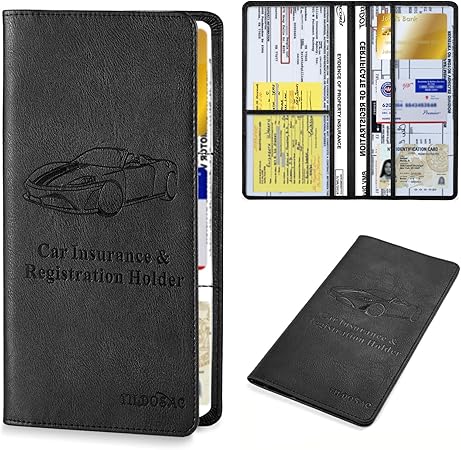
TILDOSAC Car Registration & Insurance Card Holder
- Well-Organized: Designed to keep important documents such as registration and insurance card, business cards, emergency information, paperwork, and gas card well-organized in one place.
- See-Through Design: The transparent material allows the owner to easily find the right document without having to fish through everything.
- Secure and Protective: The holder has 6 clear sleeves to securely store gas cards, car registration and insurance information, protecting them from damage or loss.
- Exquisite Craftsmanship: Made of high-quality materials such as sleek and trim PU leather and heavy-duty vinyl PVC, making it durable, anti-scratch, and tear-resistant.
- Slim Design with Enough Space: The slim, lightweight design is perfect for placement in any glovebox or console, and fits documents up to 9″x 4.7″(23cm x 12cm) while still having enough space to hold all you need. Suitable for cars, minivans, sedans, motorcycles, and boats.

Lusso Gear Car Organizer for Front Seat or Car Seat
- Organize: The Lusso Gear Car Front Seat Organizer helps declutter your front seat and organize your office and travel supplies in your vehicle.
- Fits Any Vehicle: It fits in any vehicle and is easy to install by attaching the strap to the passenger car seat headrest and adjusting to your preferred height.
- Multiple Compartments: The organizer is designed to provide multifunctional compartments and pockets for easy access, catering to different automotive users, including road warriors, soccer moms, and those who need a high-quality mobile office organizer.
- Stylish: The organizer is stylish and sturdy, and it comes with a built-in security flap that conceals the contents of your organizer and acts as a theft deterrent.

- Large Capacity and Foldable Design: L7.5″ x H11.5″x W7.5″ with a waterproof lining that is easy to clean and can be folded for storage when not in use.
- Superior Durability and Waterproof: Made of premium Oxford Polyester material, sturdy and firm, with a waterproof lining to prevent leaks and spills.
- Multi-functional Use: Features two side mesh pockets and a front pocket that can be used for storage of small items such as tissues, snacks, and drinks.
- Smart Multipurpose Design: The separated lid design allows for the use of disposable garbage bags while keeping the lid closed.
- Easy to Install: Adjustable straps with buckle for hanging in various locations such as the front or back of a seat, center console, glove box, or gear stick, and an elastic strap with hook to keep the bag in place and prevent spills.
What are the Expiration Dates for Making Changes to Car Insurance Policies?
1. Liability Insurance Coverage
What are the expiration dates for making changes to liability insurance coverage? [Sequence]: Whenever your liability coverage is cancelled or nonrenewed, your insurance company is required to notify the North Carolina Division of Motor Vehicles (DMV). The DMV is required to notify you when they receive the notification. If there is a penalty, the DMV will advise you of such and what action, if any, that you need to take. In order to make changes to your liability coverage, you must do so within 30 days of acquiring a new vehicle and inform your insurance company. Additionally, you may opt to increase or decrease your levels of coverage at any time, but be aware that certain coverages such as loan/lease payoff coverage and deductible reductions will vary between companies.
2. Uninsured/Underinsured Motorist Coverage
What are the expiration dates for making changes to uninsured/underinsured motorist coverage? In most states, you must carry a minimum level of liability insurance, and some states require you to buy PIP and uninsured/underinsured car insurance coverage. You can add or drop coverages as needed, but you must notify the insurance company within 30 days after acquiring a new vehicle in order for the coverage to remain valid. You should also contact your agent for specifics about rideshare insurance and for family members who are permanently living in your home.
3. Car Insurance Coverage
What are the expiration dates for making changes to car insurance policies? Generally, any changes made to your car insurance policy will take effect the same day you make them. However, it’s important to be aware of the expiration dates associated with the policy in order to ensure you are not left unprotected. For instance, most policies have an expiration date of 6 or 10 months after the initial purchase, so if you need to make a change or update your coverage, it should be done before the expiration date.
4. Coverage for Excess Damage
What are the expiration dates for making changes to car insurance policies for coverage for excess damage? The time frame in which you can make changes to your car insurance policy for coverage for excess damage depends on the type of coverage you are looking to add. Some coverages, such as liability, collision, comprehensive, personal injury protection, medical payments, and uninsured motorist coverage, are offered by major companies and may be added to your policy at any time. Other specialized coverages, such as loan/lease payoff coverage (gap insurance), student discounts, good driving discounts, or deductible reductions, may have expiration dates or be subject to additional terms and conditions. Therefore, it is important to check with your insurance provider to determine the exact expiration dates and other details of any policy changes you are considering.
5. Safety Equipment Discounts
When are safety equipment discounts for car insurance policies expired? The expiration of these discounts vary based on the state, coverage, and type of safety feature. Generally, the discounts are available until the policyholder makes a change to the policy or when the policy is up for renewal. It’s important to check with your insurance provider to find out what discounts you can take advantage of.
6. Teen Driver Coverage
What are the expiration dates for making changes to teen driver coverage? The expiration dates for making changes to teen driver coverage depend on the insurance company offering the coverage. Most basic coverages, such as liability, collision, comprehensive, personal injury protection, medical payments, and uninsured motorist coverage are usually offered by major companies. However, discounts, specialized coverages, and auto insurance rates can vary between companies. You must also take into account any state-mandated minimum coverage requirements, and you may need to add personal injury protection (PIP) or MedPay to supplement your health insurance. Lastly, you may need to add rideshare insurance before beginning working for a transportation network service company. Speak to a licensed insurance agent for more information about making changes to teen driver coverage.
7. Rental Car Reimbursement Insurance
What are the expiration dates for making changes to car insurance policies for rental car reimbursement? [Sequence]
Changes to car insurance policies for rental car reimbursement can be made up until Jul 14, 2022 for basic coverages and up until Sep 06, 2022 for more specialized coverages. To keep coverage up-to-date, it’s recommended to review your policy on an annual basis.
8. Personal Injury Protection
What are the expiration dates for making changes to Personal Injury Protection (PIP) policies? Changes to PIP policies can be made at any time, however, the changes will not have any retroactive effect and will only be effective from the date of the policy change. Additionally, some states require PIP coverage to be maintained for a certain period of time and may impose a penalty for canceling the policy before the expiration of the required time period.
9. Comprehensive Coverage
What are the expiration dates for making changes to car insurance policies for comprehensive coverage? Most insurance companies allow policyholders to make changes to their car insurance policies at any time. However, some companies may have specific deadlines for making changes to comprehensive coverage, such as adding or dropping coverage. It is important to contact your insurance provider to find out the exact expiration dates for making changes to comprehensive coverage.
10. State Minimum Requirements
Step 1: Check the state’s car insurance laws and regulations. States have their own laws and regulations regarding car insurance policies, and they may vary from state to state.
Step 2: Contact the state’s insurance regulator. Contact the regulator in the state where you want to make a change to your car insurance policy to understand what changes are allowed.
Step 3: Notify your insurer. Once you have determined which changes you can make to your car insurance policy, notify your insurer of the changes you want to make.
Step 4: Complete the paperwork. Your insurer will provide paperwork to complete in order to make the changes to your policy. Read the documents carefully and make sure that all the information is correct.
Step 5: Make your payment. If any additional fees are associated with making changes to your policy, make sure to pay them accordingly. After that, your changes should become effective.
Options for Switching Car Insurance Policies
1. Mid-Policy Change
Step 1: Conduct necessary research to get to know as much as possible about the issue. Make sure the policy change you are proposing is appropriate and helpful and will not have unintended consequences.
Step 2: Know who the current policy makers and influencers are, and who supports current policy.
Step 3: Determine your allies and opponents. Be aware of who your most difficult opponents are and be prepared to counter their arguments and attacks.
Step 4: Participate in a strategic planning process that involves representation from all groups affected by or concerned with the issue.
Step 5: Develop an overall strategy to ensure that changing policies is necessary and appropriate.
Step 6: Take the time to plan, even if it is a matter of hours rather than days or weeks.
Step 7: Make personal contact with the people who will be impacted by the policy change.
Step 8: Monitor the pulse of the community to ensure that the policy change is beneficial and will be supported.
Step 9: Be positive and proactive in your approach.
Step 10: Encourage and facilitate participation from the community.
Step 11: Publicize your policy change through all available means.
Step 12: Be persistent in your efforts to see the policy change through.
2. Policy Switch
A policy switch is the process of changing an existing insurance policy to a new one. This can be a beneficial process if you are looking to get better coverage or save money on premiums. By making a policy switch, you can customize your insurance plan to your specific needs and have access to the most up-to-date products on the market. Additionally, you can compare different insurance companies and find the best rates for your needs. Making a policy switch requires research and review of your current policy and the available options, so it is important to consider all factors and make an informed decision.
3. Penalties and Discounts
Switching car insurance policies can be beneficial in terms of finding a better deal on coverage, but there are also some penalties and discounts that come along with it. Generally, the insurers will impose a fee when the policy is canceled or switched. Additionally, depending on the company, you may be eligible for certain discounts if you make the switch.
For example, 21st Century offers a 5% discount for anti-lock brakes, Allstate offers a 3% discount for anti-theft, and Ameriprise offers a 10% discount for anti-theft. AAA offers a 10% discount for anti-lock brakes, while American Family offers a 3% discount for anti-theft. Country Financial offers a 25% discount for anti-theft, and Esurance offers a 5% discount for anti-lock brakes.
On the other hand, Farmers offers a 5% discount for anti-lock brakes, Geico offers a 25% discount for anti-theft, and Liberty Mutual offers a 20% discount off of the comprehensive portion of the policy for anti-theft. MetLife offers a 10% discount for anti-theft, and Nationwide offers a 25% discount for anti-theft combined with a vehicle recovery discount.
Lastly, Progressive offers a 15% discount off of the comprehensive coverage for anti-theft, Safe Auto offers a 10% discount if you go six months without filing a claim, Safeco offers a 20% discount with “Safeco Safety Rewards” if you have no at-fault accidents in the last 36 months, and State Farm offers a 15% discount if you have consistently insured for at least three consecutive years without an accident.
Overall, the penalties and discounts for switching car insurance policies vary from company to company, so it is important to shop around and compare different insurers to find the best deal.
4. State Minimum Requirements
To switch car insurance policies, you must first meet your state’s minimum requirements. Depending on the state, these requirements may include providing proof of financial responsibility, providing proof of identity and residence, providing the VIN number of the vehicle, and providing your current policy information. It is also important to make sure you are canceling your existing policy in a timely manner before switching.
Once you have met the minimum requirements, you can begin comparing policies from different insurance companies to find the one that best fits your needs. Make sure to check for discounts that you may qualify for, such as multi-vehicle, good driver, or defensive driver discount. When you have selected the policy that fits your needs, you can complete an application and submit the necessary documents. Once the application is approved and the payment is made, your new policy will be in effect.
5. Insurance Company Websites
Some of the options for accessing insurance company websites are using your phone or tablet, using a computer, or using a free online quote tool. You can compare quotes from different companies by entering your ZIP code into the free quote tool, which can help you save money on car insurance. Additionally, you can use your current car insurance provider to negotiate lower rates, even if you don’t want to switch providers.
6. Underwriting Criteria
If you’re looking to switch car insurance policies, there are certain underwriting criteria you’ll need to consider. Here’s what you’ll need to do to switch car insurance policies step-by-step:
1. Gather the necessary information. You’ll need to provide information such as the full name, occupation, driver’s license and Social Security number of all drivers you want to add to the policy, your average commuting distance, your legal and mailing address, your current auto insurance policy details (if any), details of each car you’re insuring (including make, model and VIN), date you purchased your car and current mileage, plus a credit or debit card number.
2. Select a car insurance company. You can compare car insurance quotes from different providers to find the best value for your coverage. Make sure you review the company’s customer service, policy features and savings opportunities, as well as its underwriting criteria.
3. Apply for a policy. Once you’ve chosen the best provider for you, you can apply for a policy online or over the phone. Make sure you have all the necessary information ready, such as your driver’s license, Social Security number, mailing address and current auto insurance policy information.
4. Review and sign the policy. Once your application is approved, you’ll need to review the full policy before signing it. Make sure you understand all of your coverage options and the terms of the policy.
5. Start your new policy. Once you’ve signed the policy, you can start your new car insurance coverage. Make sure you let your current provider know you’re switching and cancel your old policy.
7. Car Insurance Mid-Policy
A mid-policy car insurance switch is the process of changing your car insurance policy before your term is up, even mid-term. This can help you save money on your monthly rates and make sure you are getting the best coverage for your needs. Changes to your policy, such as adding or subtracting drivers and/or vehicles, adjusting coverages, or changing your address, will directly impact your rates. Other changes such as increasing or decreasing coverage and moving to a new location can also be made mid-policy. Reviewing your insurance policy and asking your insurance company about discounts can also help you save money.
8. Policy Changes
Step 1: Prepare for changing policies. Conduct research to understand the issue, familiarize yourself with current policies and laws, and identify your allies and opponents.
Step 2: Plan carefully for changing policies. Develop a participatory strategic plan that takes into account all groups affected by or concerned with the issue.
Step 3: Personal contact. Reach out to lawmakers and other policy makers, and make sure that they are aware of your issue and your goals.
Step 4: Pulse of the community. Stay in touch with the public mood and sentiment on your issue. Use polls, surveys, and other measures of public opinion to gauge people’s reactions.
Step 5: Positivism. Frame your arguments in positive terms and avoid negative language.
Step 6: Participation. Encourage broad participation in the policy change process.
Step 7: Publicity. Use media, social media, and other channels to draw attention to your issue.
Step 8: Persistence. Keep at it, even when it seems like progress is slow or stalled. With dedication and hard work, policy change is possible.
9. Billing Cycle
Switching car insurance policies can be a complex process, and the billing cycle can be confusing. Generally, any changes to your policy cannot be done instantly, and you’ll usually see the changes reflected on your next bill. However, if you need the change to take effect immediately, most insurance companies will allow for off-cycle changes. If you go this route, you’ll likely get charged prorated fees on your next bill.
When making changes to your car insurance policy, you may receive a cancellation notice if your payment due date has passed and the amount due has not been paid. It is important to pay your bill on time to avoid a lapse in your insurance coverage, as this can lead to higher premiums. You can make a payment after your due date, but you may incur late charges.
You can make or schedule your payment online or by phone and it will be accepted right away. If you’re setting up an automatic payment, your payment will be accepted on the regularly scheduled date.
10. Policy Termination Date
What is the policy termination date for switching car insurance policies? January 9, 2023.