Don't have your VIN Number?
Click here to send yourself a reminder.

Just What Is a Car Recall? Car Safety Recall Definition - A safety recall is an automotive manufacturer's way of notifying vehicle customers that their product has a flaw. The automobile problem is serious enough that if you do not correct the flaw your and/or your passengers' safety could be at risk. Generally recalls are initiated by the US Government, but sometimes individual car manufacturers will pre-emptively initiate a recall.

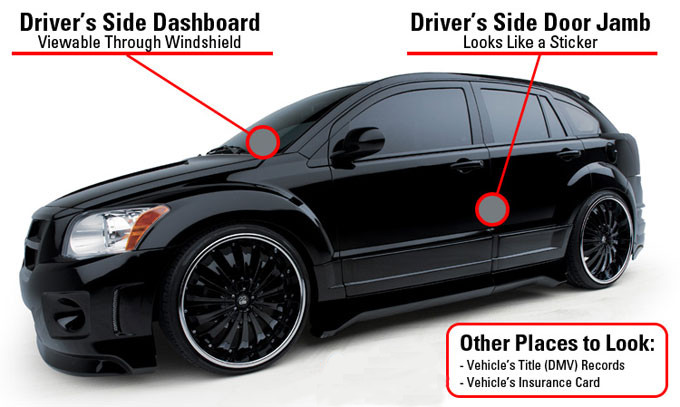
Where Do I Find My VIN (Vehicle Identification Number)? Look on the lower left of your car’s windshield for your 17-digit Vehicle Identification Number (VIN). Your VIN is also located on your car’s registration card, and it may be shown on your insurance card.

Auto Tip - How Do I Find Out If My Vehicle Has A Recall? ==> An easy way to determine if you have an active car recall is to just enter your VIN number at the top of this page and CarFax will report if there are any issues at all with your vehicle.

vin-number

Vehicle Identification Numbers

  • TOYOTA TUNDRA 2018

    Toyota Motor Engineering & Manufacturing (Toyota) is recalling certain 2018-2019 Toyota Tundra and Sequoia vehicles and 2019 Toyota Avalon and Avalon Hybrid vehicles. The air bag electronic control unit (ECU) may erroneously detect a fault during the vehicle start-up self check. If this occurs, the ECU may not deploy the airbags as intended, in the event of a crash. As such, these vehicles fail to comply with the requirements of Federal Motor Vehicle Safety Standard (FMVSS) number 208, Occupant Crash Protection, and 214, Side Impact Protection.

  • TOYOTA TUNDRA 2019

    Toyota Motor Engineering & Manufacturing (Toyota) is recalling certain 2018-2019 Toyota Tundra and Sequoia vehicles and 2019 Toyota Avalon and Avalon Hybrid vehicles. The air bag electronic control unit (ECU) may erroneously detect a fault during the vehicle start-up self check. If this occurs, the ECU may not deploy the airbags as intended, in the event of a crash. As such, these vehicles fail to comply with the requirements of Federal Motor Vehicle Safety Standard (FMVSS) number 208, Occupant Crash Protection, and 214, Side Impact Protection.

  • TOYOTA TUNDRA 2019

    Toyota Motor Engineering & Manufacturing (Toyota) is recalling certain 2018-2019 Toyota Tundra and Sequoia vehicles and 2019 Toyota Avalon and Avalon Hybrid vehicles. The air bag electronic control unit (ECU) may erroneously detect a fault during the vehicle start-up self check. If this occurs, the ECU may not deploy the airbags as intended, in the event of a crash. As such, these vehicles fail to comply with the requirements of Federal Motor Vehicle Safety Standard (FMVSS) number 208, Occupant Crash Protection, and 214, Side Impact Protection.

  • TOYOTA AVALON HYBRID 2019

    Toyota Motor Engineering & Manufacturing (Toyota) is recalling certain 2018-2019 Toyota Tundra and Sequoia vehicles and 2019 Toyota Avalon and Avalon Hybrid vehicles. The air bag electronic control unit (ECU) may erroneously detect a fault during the vehicle start-up self check. If this occurs, the ECU may not deploy the airbags as intended, in the event of a crash. As such, these vehicles fail to comply with the requirements of Federal Motor Vehicle Safety Standard (FMVSS) number 208, Occupant Crash Protection, and 214, Side Impact Protection.

  • TOYOTA AVALON HYBRID 2019

    Toyota Motor Engineering & Manufacturing (Toyota) is recalling certain 2018-2019 Toyota Tundra and Sequoia vehicles and 2019 Toyota Avalon and Avalon Hybrid vehicles. The air bag electronic control unit (ECU) may erroneously detect a fault during the vehicle start-up self check. If this occurs, the ECU may not deploy the airbags as intended, in the event of a crash. As such, these vehicles fail to comply with the requirements of Federal Motor Vehicle Safety Standard (FMVSS) number 208, Occupant Crash Protection, and 214, Side Impact Protection.

  • TOYOTA SEQUOIA 2018

    Toyota Motor Engineering & Manufacturing (Toyota) is recalling certain 2018-2019 Toyota Tundra and Sequoia vehicles and 2019 Toyota Avalon and Avalon Hybrid vehicles. The air bag electronic control unit (ECU) may erroneously detect a fault during the vehicle start-up self check. If this occurs, the ECU may not deploy the airbags as intended, in the event of a crash. As such, these vehicles fail to comply with the requirements of Federal Motor Vehicle Safety Standard (FMVSS) number 208, Occupant Crash Protection, and 214, Side Impact Protection.

  • TOYOTA SEQUOIA 2018

    Toyota Motor Engineering & Manufacturing (Toyota) is recalling certain 2018-2019 Toyota Tundra and Sequoia vehicles and 2019 Toyota Avalon and Avalon Hybrid vehicles. The air bag electronic control unit (ECU) may erroneously detect a fault during the vehicle start-up self check. If this occurs, the ECU may not deploy the airbags as intended, in the event of a crash. As such, these vehicles fail to comply with the requirements of Federal Motor Vehicle Safety Standard (FMVSS) number 208, Occupant Crash Protection, and 214, Side Impact Protection.

  • TOYOTA SEQUOIA 2019

    Toyota Motor Engineering & Manufacturing (Toyota) is recalling certain 2018-2019 Toyota Tundra and Sequoia vehicles and 2019 Toyota Avalon and Avalon Hybrid vehicles. The air bag electronic control unit (ECU) may erroneously detect a fault during the vehicle start-up self check. If this occurs, the ECU may not deploy the airbags as intended, in the event of a crash. As such, these vehicles fail to comply with the requirements of Federal Motor Vehicle Safety Standard (FMVSS) number 208, Occupant Crash Protection, and 214, Side Impact Protection.

  • TOYOTA SEQUOIA 2019

    Toyota Motor Engineering & Manufacturing (Toyota) is recalling certain 2018-2019 Toyota Tundra and Sequoia vehicles and 2019 Toyota Avalon and Avalon Hybrid vehicles. The air bag electronic control unit (ECU) may erroneously detect a fault during the vehicle start-up self check. If this occurs, the ECU may not deploy the airbags as intended, in the event of a crash. As such, these vehicles fail to comply with the requirements of Federal Motor Vehicle Safety Standard (FMVSS) number 208, Occupant Crash Protection, and 214, Side Impact Protection.

  • TOYOTA AVALON 2019

    Toyota Motor Engineering & Manufacturing (Toyota) is recalling certain 2018-2019 Toyota Tundra and Sequoia vehicles and 2019 Toyota Avalon and Avalon Hybrid vehicles. The air bag electronic control unit (ECU) may erroneously detect a fault during the vehicle start-up self check. If this occurs, the ECU may not deploy the airbags as intended, in the event of a crash. As such, these vehicles fail to comply with the requirements of Federal Motor Vehicle Safety Standard (FMVSS) number 208, Occupant Crash Protection, and 214, Side Impact Protection.

  • TOYOTA AVALON 2019

    Toyota Motor Engineering & Manufacturing (Toyota) is recalling certain 2018-2019 Toyota Tundra and Sequoia vehicles and 2019 Toyota Avalon and Avalon Hybrid vehicles. The air bag electronic control unit (ECU) may erroneously detect a fault during the vehicle start-up self check. If this occurs, the ECU may not deploy the airbags as intended, in the event of a crash. As such, these vehicles fail to comply with the requirements of Federal Motor Vehicle Safety Standard (FMVSS) number 208, Occupant Crash Protection, and 214, Side Impact Protection.

  • SUZUKI GSX-S750 2018

    Suzuki Motor of America, Inc. (Suzuki) is recalling certain 2017-2018 Suzuki DL650A, DL650XA, GSX-R1000, GSX-R1000R, and 2018 GSX-S750 motorcycles. During installation, the fuel pump O-ring may have been twisted, reducing the sealing performance and possibly resulting in a fuel leak.

  • SUZUKI DL650 2017

    Suzuki Motor of America, Inc. (Suzuki) is recalling certain 2017-2018 Suzuki DL650A, DL650XA, GSX-R1000, GSX-R1000R, and 2018 GSX-S750 motorcycles. During installation, the fuel pump O-ring may have been twisted, reducing the sealing performance and possibly resulting in a fuel leak.

  • SUZUKI DL650 2018

    Suzuki Motor of America, Inc. (Suzuki) is recalling certain 2017-2018 Suzuki DL650A, DL650XA, GSX-R1000, GSX-R1000R, and 2018 GSX-S750 motorcycles. During installation, the fuel pump O-ring may have been twisted, reducing the sealing performance and possibly resulting in a fuel leak.

  • SUZUKI GSX-R1000 2018

    Suzuki Motor of America, Inc. (Suzuki) is recalling certain 2017-2018 Suzuki DL650A, DL650XA, GSX-R1000, GSX-R1000R, and 2018 GSX-S750 motorcycles. During installation, the fuel pump O-ring may have been twisted, reducing the sealing performance and possibly resulting in a fuel leak.

  • SUZUKI GSX-R1000 2017

    Suzuki Motor of America, Inc. (Suzuki) is recalling certain 2017-2018 Suzuki DL650A, DL650XA, GSX-R1000, GSX-R1000R, and 2018 GSX-S750 motorcycles. During installation, the fuel pump O-ring may have been twisted, reducing the sealing performance and possibly resulting in a fuel leak.

  • TOYOTA PRIUS V 2014

    Toyota Motor Engineering & Manufacturing (Toyota) is recalling certain 2010-2014 Toyota Prius and 2012-2014 Toyota Prius V vehicles. Excessive voltage in the Intelligent Power Module (IPM) within the inverter may cause the hybrid system to shut down, causing the vehicle to stall while being driven.

  • TOYOTA PRIUS 2014

    Toyota Motor Engineering & Manufacturing (Toyota) is recalling certain 2010-2014 Toyota Prius and 2012-2014 Toyota Prius V vehicles. Excessive voltage in the Intelligent Power Module (IPM) within the inverter may cause the hybrid system to shut down, causing the vehicle to stall while being driven.

  • TOYOTA PRIUS V 2013

    Toyota Motor Engineering & Manufacturing (Toyota) is recalling certain 2010-2014 Toyota Prius and 2012-2014 Toyota Prius V vehicles. Excessive voltage in the Intelligent Power Module (IPM) within the inverter may cause the hybrid system to shut down, causing the vehicle to stall while being driven.

  • TOYOTA PRIUS V 2012

    Toyota Motor Engineering & Manufacturing (Toyota) is recalling certain 2010-2014 Toyota Prius and 2012-2014 Toyota Prius V vehicles. Excessive voltage in the Intelligent Power Module (IPM) within the inverter may cause the hybrid system to shut down, causing the vehicle to stall while being driven.